Herculaneum by the Circumvesuviana
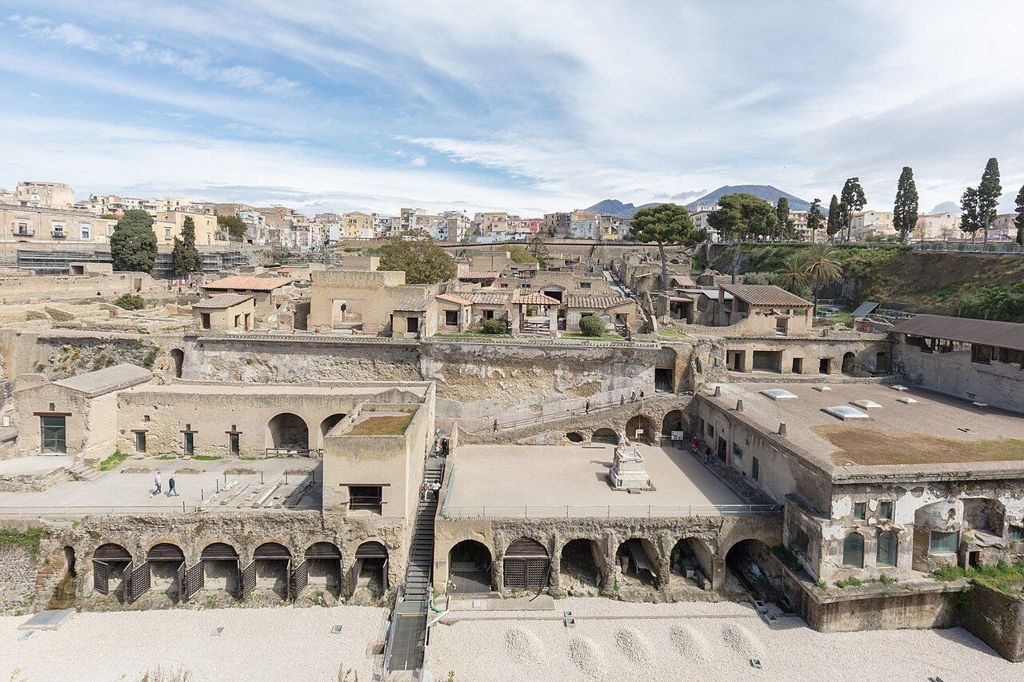
Smaller than Pompeii and far better preserved, Herculaneum keeps its upper floors, wooden beams and painted rooms. It sits a short local train ride from central Naples.
Herculaneum was a small, prosperous Roman town on the coast below Vesuvius. When the volcano erupted in 79 AD, it was buried much more deeply than Pompeii, under many metres of hot volcanic material that later hardened into rock. That burial, so destructive at the time, preserved things that rarely survive anywhere else: wooden beams, doors and furniture, upper storeys, and the outline of daily life in remarkable detail. It is a far smaller site than Pompeii, and you can see the heart of it in a morning.
The ancient town was home to a few thousand people. Legend credited its founding to Hercules, which gave it its name. It looked out over the sea, with the houses of its richer families set along the edge of a terrace above the shore.
Getting there by Circumvesuviana
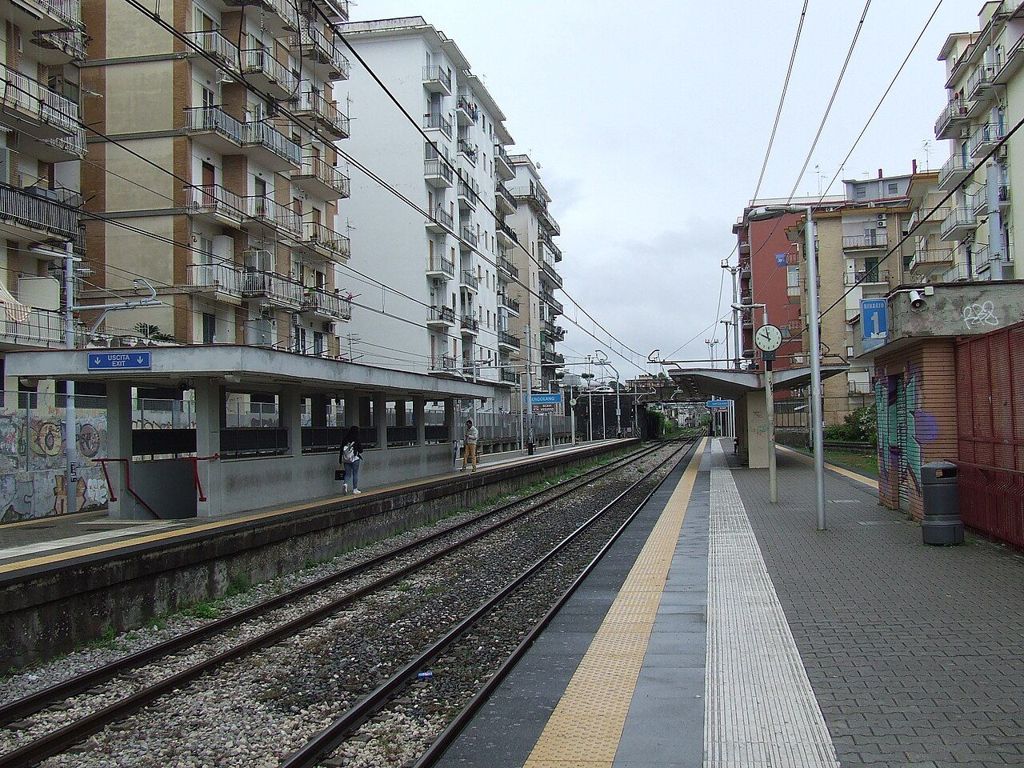
The Circumvesuviana is the local railway that runs around the bay from Naples. Trains on the line to Sorrento leave from Porta Nolana station and stop under the main railway station at Piazza Garibaldi, then run along the coast. Get off at Ercolano Scavi, roughly twenty minutes from the centre. From the station, walk downhill along the main street for about ten minutes to the entrance of the archaeological park.
The trains are basic, often crowded, and run on a timetable that changes; services can be cancelled or delayed. Check the departures before you go, and buy a ticket at the station before boarding. Keep your bag in front of you and your phone out of reach of the doors. The same line continues to Pompeii and Sorrento if you are making a longer day of it.
A town buried in 79 AD
The eruption began in late summer or autumn of 79 AD. Pompeii, downwind, was first buried by falling pumice. Herculaneum, on the other side of the mountain, received less fall at first, but in the night it was overwhelmed by pyroclastic surges and flows, avalanches of superheated gas, ash and rock that swept down the slopes. Layer after layer buried the town under around twenty metres of material, pushing the coastline far out to sea.
Excavation began in the eighteenth century under the Bourbon kings, through tunnels dug down from the surface in search of statues; many of the finds are now in the city's archaeological museum. Open-air excavation started in the twentieth century. Just outside the main site lies the Villa of the Papyri, a grand seaside house where hundreds of carbonised papyrus scrolls were found. Scholars are still working to read them, more and more with scanning methods that avoid unrolling them. The villa itself is not normally open to visitors. Much of the ancient town remains unexcavated beneath the modern town of Ercolano, whose buildings you see crowding the edge of the site.
Next door: The city under the city
Carbonised wood and houses with upper floors
The heat of the flows charred organic material rather than burning it away, and the deep, sealed burial kept it. As you walk the streets, look up: in some houses, wooden beams still support balconies and upper floors. In the House of the Wooden Partition, a folding wooden screen still stands in its original place between two rooms. Elsewhere you will see carbonised doors, beds, shelving and stair treads.
The houses themselves are often better preserved than those at Pompeii. Wall paintings keep their colour, and mosaics are still in place, notably the glittering wall mosaic of Neptune and Amphitrite in the house named after it. The baths, with their changing rooms, benches and floors, are among the best preserved anywhere, and the street-side counters of shops still hold the large jars set into them.
As you walk the streets, look up: in some houses, wooden beams still support balconies and upper floors.
The boat sheds on the ancient shore
At the lowest edge of the site, below the terrace of the town, a row of vaulted chambers opens onto what was once the beach. For a long time it was believed that almost all the inhabitants of Herculaneum had escaped. Then, from the 1980s, excavators found the remains of around three hundred people inside these chambers and on the shore in front of them, where they had sheltered in the hope of rescue by sea.
The study of these skeletons has told archaeologists a great deal about the health, diet and lives of ordinary people in the Roman world. The chambers are usually seen from the walkway above, and the scene is a sombre one. The line of the ancient shore, now several hundred metres from the modern sea, shows how much the eruption changed the coast.
Making the most of the site
- Allow two to three hours for the main streets and houses.
- Some houses open and close in rotation for conservation. Check which are open when you arrive.
- Shade is limited. In summer, go at opening time and carry water.
- Paths are uneven, with steps and ramps. Wear shoes with grip.
Plan to see the frescoes and bronzes in the museum in Naples before or after the site. They fill in the decoration and objects that the bare rooms lack.
Back to Naples
Ercolano Scavi station is a short uphill walk from the exit, and trains back towards Naples run through the day. From the coast you can see Vesuvius rising behind the town, the same view the people of Herculaneum had before the eruption. Once back in the city, an evening walk along the seafront gives you the volcano again, this time from across the bay.
Before you set off
| Getting there | Circumvesuviana train to Ercolano Scavi |
|---|---|
| Metro and trains | Circumvesuviana to Ercolano Scavi |
| Bring | Water, a hat, sunscreen, comfortable shoes |