The archaeological museum: Pompeii indoors
The finest objects from Pompeii and Herculaneum are not at the sites but in a red palazzo in central Naples, alongside one of the great collections of ancient sculpture.
If you are visiting Pompeii or Herculaneum, come here too, ideally before. The Museo Archeologico Nazionale holds the mosaics, wall paintings, bronzes and everyday objects removed from the buried cities from the eighteenth century onward, together with the sculpture collection of the Farnese family. Few museums in the world give such a complete picture of Roman life. The building is big and the collections are uneven in presentation, so a little planning goes a long way.
A palace of the Bourbons
The museum occupies a large red building on Piazza Museo, at the northern edge of the old centre. It was begun in the late sixteenth century as cavalry barracks and later used as the seat of the university. In the eighteenth century the Bourbon kings of Naples turned it into a home for their two great collections: the antiquities emerging from the excavations around Vesuvius, and the Farnese marbles, which Charles of Bourbon inherited through his mother, the last of the Farnese line. Over time it became the national museum it is today.
The layout is easier than it first appears. The ground floor holds the large sculpture. The mezzanine holds the mosaics. The upper floor holds the wall paintings, the finds from the Villa of the Papyri, and the great hall. The Egyptian collection and the epigraphic collection are in the basement. The Egyptian rooms, with coffins, statues, mummies and amulets, are often quieter than the rest and make a cool retreat on a hot afternoon.
The Farnese sculptures
The ground-floor galleries are filled with Roman marble statues, many of them copies of earlier Greek works, collected by the Farnese family in Rome in the sixteenth century. Two pieces stop most visitors. The Farnese Hercules, a colossal figure of the hero resting on his club after his labours, is a master study of muscle and fatigue. Walk around it: the apples of the Hesperides are held in his hand behind his back.
The Farnese Bull is even larger: a group carved from a single block of marble, showing the punishment of Dirce, tied to a wild bull by two brothers. Both statues were found in the Baths of Caracalla in Rome. They were restored heavily over the centuries, which is part of their story.
Around them stand portrait busts of emperors and their families, gods, athletes and decorative marbles from Roman villas. Many pieces were completed in the Renaissance with new heads, arms or legs, so it pays to read the labels and look for the joins between old stone and new.
The Alexander mosaic and the mosaic rooms
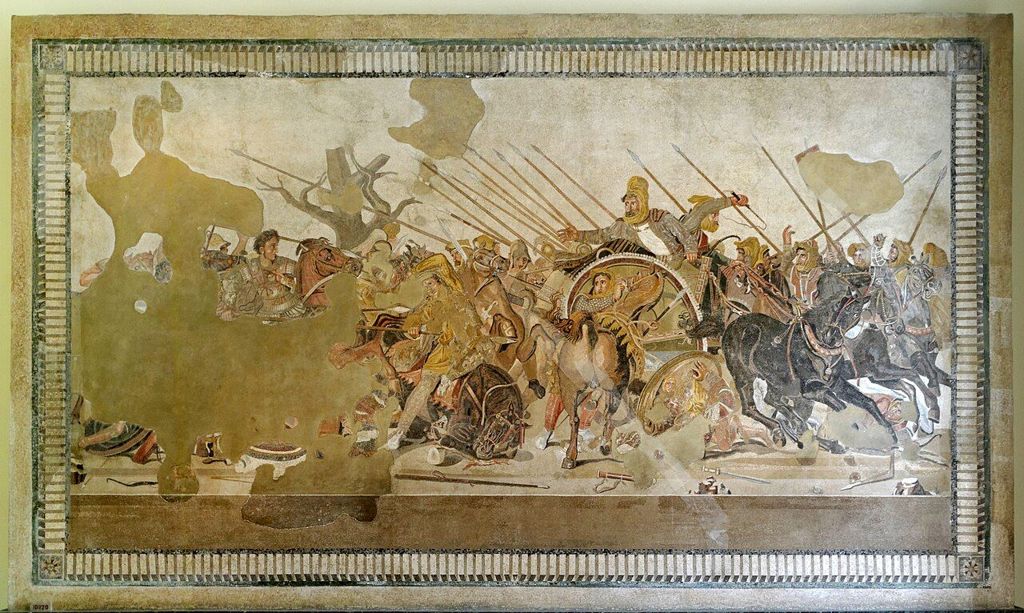
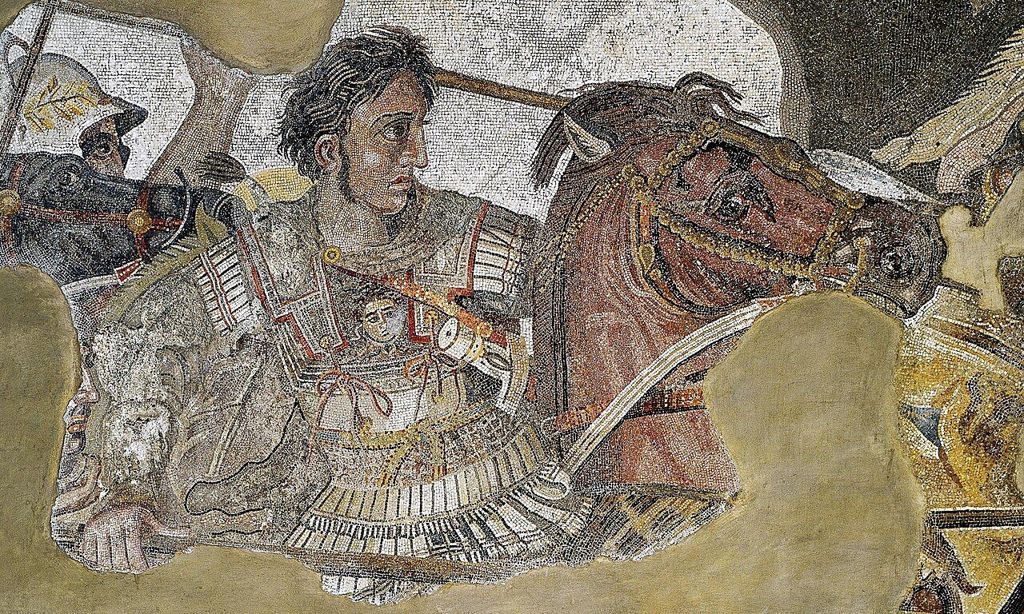
The mosaics on the mezzanine come mostly from Pompeii, and they range from guard dogs and fish to theatre masks and floor patterns. The centrepiece is the Alexander mosaic, found in the House of the Faun. It shows a battle between Alexander the Great and the Persian king Darius, with Darius turning to flee in his chariot. It is made of more than a million tiny tesserae and is thought to copy a lost Greek painting.
Large works like this one are sometimes moved, studied or restored, and rooms in the museum close for maintenance or rearrangement from time to time.
Next door: Spaccanapoli, the street that splits the city
Frescoes from Pompeii and Herculaneum
Upstairs, room after room is hung with wall paintings cut from the houses of Pompeii, Herculaneum and Stabiae. They include mythological scenes, still lifes of fruit and glass, garden views, portraits and architectural fantasies. Seeing them together helps you picture the bare rooms you walk through at the sites, which were once painted from floor to ceiling.
Nearby are the finds from the Villa of the Papyri at Herculaneum, a grand seaside villa explored by tunnels in the eighteenth century. Its bronzes, including a seated Hermes and a set of life-size figures of young women, are among the finest to survive from antiquity. Our guide to Herculaneum explains how the town and its villa were buried.
The upper floor also holds the great hall, a vast room with a meridian line set into the floor, and display cases of everyday things: tools, lamps, cooking pots, glassware, and carbonised food.
Seeing them together helps you picture the bare rooms you walk through at the sites, which were once painted from floor to ceiling.
The Secret Cabinet
The Gabinetto Segreto, or Secret Cabinet, holds the erotic art and objects found at Pompeii and Herculaneum: paintings, sculptures, lamps, amulets and household items. For generations it was locked away and shown only to a few. Today it is open as part of the normal visit, in its own rooms, with signs explaining that much of the imagery was meant to bring luck or ward off harm rather than simply to shock.
The content is explicit. Families with young children may prefer to skip it, and it is easy to do so because it is set apart from the main route.
Planning your visit
- Allow at least three hours. A focused visit can cover the Farnese sculptures, the mosaics and the frescoes in that time.
- The museum has a weekly closing day.
- Weekday mornings are calmest. Holiday weekends and free-entry days can be crowded.
- On busy days, buying a ticket in advance can save time in the queue.
- Labels are uneven. A guidebook or the museum's own printed or audio material helps.
- The building is large and warm in summer. Bring water and take breaks.
The museum sits at the northern edge of the old centre, a short walk uphill from Via dei Tribunali. Many visitors combine a morning here with an afternoon below ground or in the catacombs, described in our guide to the underground city.
Before you set off
| Getting there | Metro Line 1 to Museo |
|---|---|
| Metro and trains | Line 1 to Museo, Line 2 to Cavour |
| Bring | Water, patience, time for two floors |