Vomero, the funiculars and Castel Sant'Elmo
A short funicular ride lifts you from the crush of the centre to the calm hill of Vomero, where a star-shaped fortress and an old monastery look out over the whole bay.
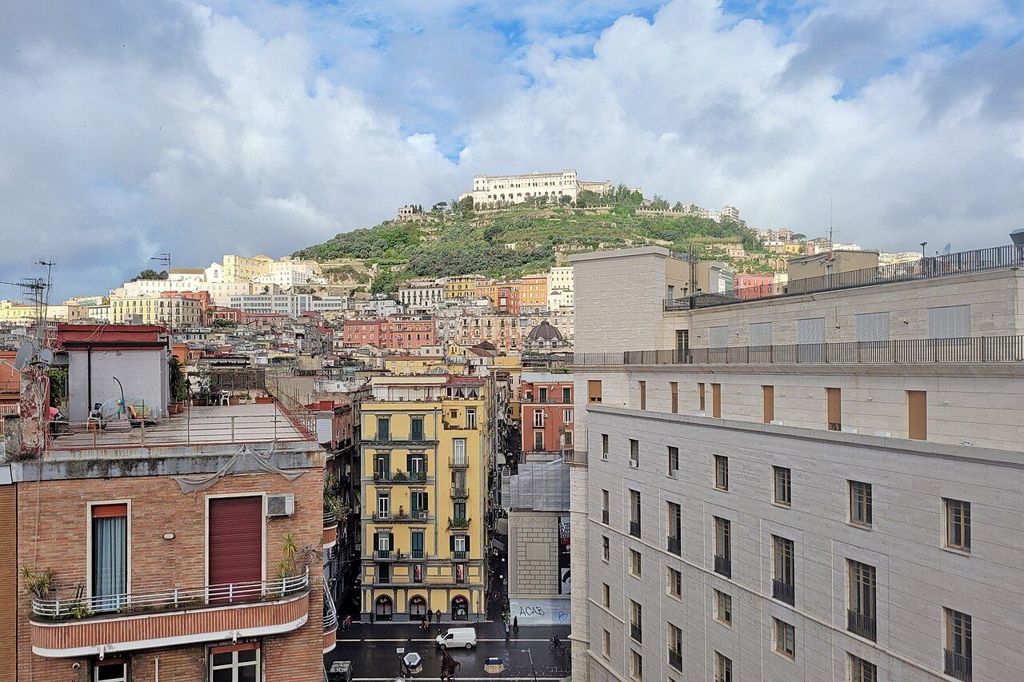
Vomero is the hill that rises immediately west of the old centre. For centuries it was mostly villas, farms and monasteries. In the late nineteenth and twentieth centuries it filled with apartment blocks and became a busy residential district with wide streets and shops. For visitors, the attractions are at its eastern edge, where Castel Sant'Elmo and the Certosa di San Martino stand on the brow of the hill with the city laid out below them.
Riding the funiculars
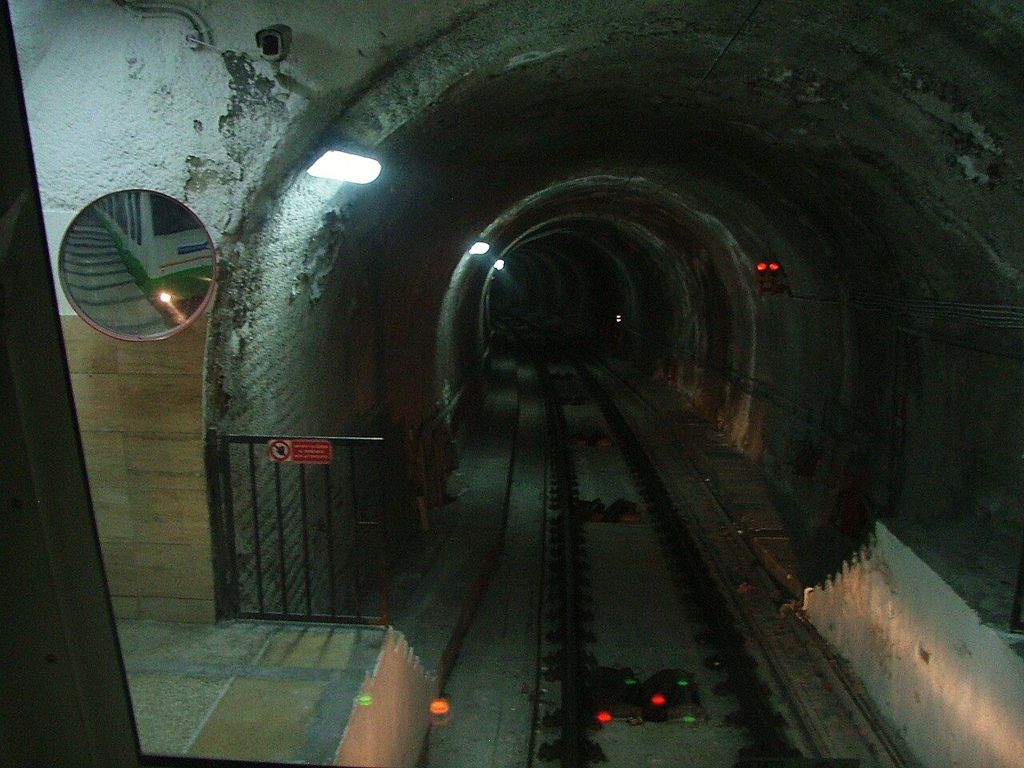
Three funicular railways climb from the lower city to Vomero, each from a different starting point. The Funicolare Centrale leaves from near Via Toledo and the Galleria Umberto, and climbs through a tunnel to Piazza Fuga. The Funicolare di Chiaia starts in the elegant district of Chiaia, near Piazza Amedeo. The Funicolare di Montesanto starts beside the market area of Montesanto, close to the old centre. A fourth line, from Mergellina, climbs instead to the hill of Posillipo.
The funiculars are part of the city's public transport and use the same tickets as the metro and buses. They run frequently through the day, though lines sometimes close for maintenance. Metro Line 1 also reaches Vomero, at Vanvitelli station, if a funicular is closed.
The cars are built in stepped compartments, so each section sits level on the slope. Seats are few and the ride is short, so most people stand. A good plan is to ride up and walk down, which saves your legs for the hill's best views and leaves the steepest stretch to gravity.
From the top stations it is a walk of ten to fifteen minutes up to the castle, partly on stairs, or a short ride on a small connecting lift or bus where they are running. Follow signs for Castel Sant'Elmo or San Martino.
Castel Sant'Elmo
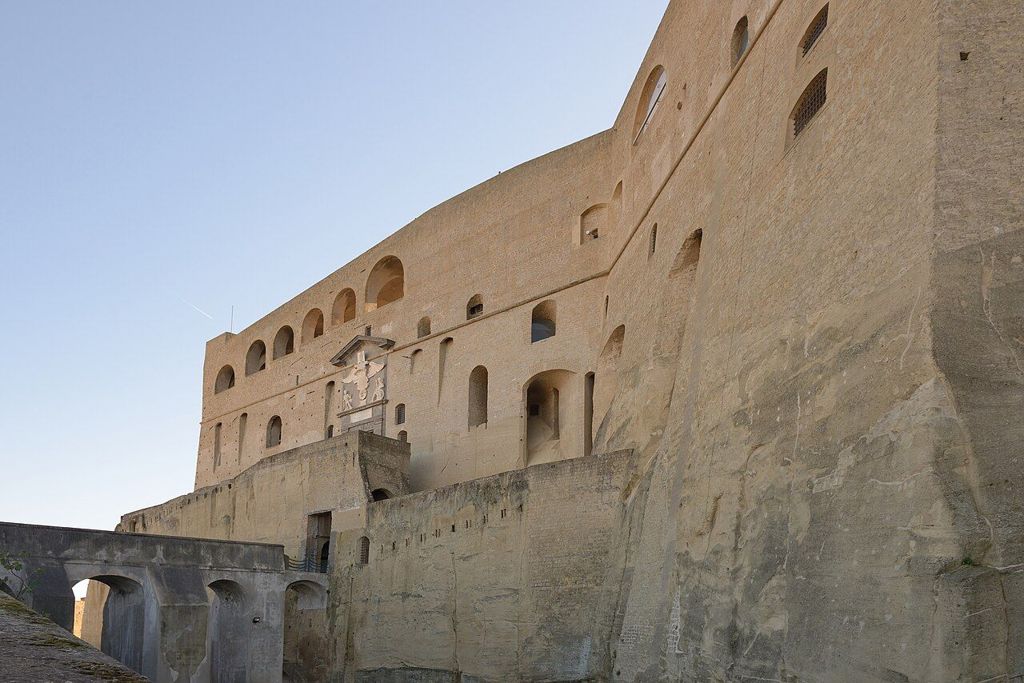
Castel Sant'Elmo stands on the highest point of the hill. A medieval fortification existed here from the fourteenth century, but the fortress you see dates from the sixteenth century, when the Spanish viceroy had it rebuilt in the shape of a six-pointed star, cut partly into the rock. Its massive walls were meant as much to watch the city as to defend it, and for long periods it served as a military prison.
Inside, the castle hosts a museum of twentieth-century Neapolitan art and exhibition spaces, but most people come for the ramparts. From the top walls the view takes in the whole of Naples: the straight cut of Spaccanapoli through the old centre, the domes and bell towers, the port, the Castel dell'Ovo on its islet, Vesuvius beyond the city and, on a clear day, Capri and the Sorrento peninsula. Bring a zoom lens if you have one.
From the top walls the view takes in the whole of Naples: the straight cut of Spaccanapoli through the old centre, the domes and bell towers, the port, the Castel dell'Ovo on its islet, Vesuvius beyond the city and, on a clear day, Capri and the Sorrento peninsula.
Next door: The seafront and Castel dell'Ovo
An entrance fee applies to the castle. Morning light is best for photographs of the bay; in the afternoon you face more into the sun.
The Certosa di San Martino
Just below the castle, the long white buildings of the Certosa di San Martino occupy a terrace with an even better view. This Carthusian monastery was founded in the fourteenth century and transformed in the seventeenth century into one of the richest Baroque complexes in southern Italy, with marble inlay, paintings and carved wood throughout its church and chapels.
The monastery is now a museum. Its great cloister is ringed with white columns, and a small monks' cemetery at one side is fenced by a marble balustrade topped with carved skulls. The gardens are terraced down the slope, and their belvedere looks straight down onto the old centre and out across the bay.
Neapolitan crib collections
San Martino holds a large collection of presepi, the elaborate nativity scenes for which Naples is famous. The most celebrated is a vast eighteenth-century crib with hundreds of figures: not only the Holy Family and the shepherds but also tavern scenes, market stalls, musicians, animals and travellers, all modelled with remarkable detail and dressed in real fabric. It gives a picture of eighteenth-century Naples as much as of Bethlehem.
If you have walked down Via San Gregorio Armeno, where the craft continues today, the collection shows how far back the tradition goes. The museum also covers the history of the city through paintings, carriages and decorative arts. Allow at least two hours for the whole Certosa, and more if you want to sit in the gardens. Some sections open only at certain times.
Walking down
You can return the way you came, by funicular, or walk down. The Pedamentina is an old stepped path of several hundred steps that zigzags from beside San Martino down the hillside towards the Montesanto area and the old centre. The views on the way are wide, the steps are steep and uneven, and some stretches are lonely, so it is best done in daylight and in good shoes. Going down is far easier than coming up.
Before leaving the hill, the streets around Piazza Vanvitelli give a sense of everyday Naples away from the crowds, and the park of the Villa Floridiana, a short walk away, offers shade, lawns and more views. From the old centre at the bottom of the steps, it is a short walk to the guided visits below ground.
Before you set off
| Getting there | Funicular from Via Toledo, Chiaia or Montesanto |
|---|---|
| Metro and trains | Funicolare Centrale up to Piazza Fuga |
| Bring | Ticket for the funicular, water, a zoom lens |